

KA Lokal Merak 429 from Merak to Rangkasbitung by Train (KAI Commuter Line Merak)
Heading back from Merak to Jakarta, I took Lokal Merak 429 to Rangkasbitung so as to complete this full-day journey by train, even though catching a bus might have been faster. The KA Lokal Merak is the locomotive-hauled commuter service extending out from the KAI Commuter Line Rangkasbitung to Merak. During my trip, the old name of Lokal Merak was still used despite already being operated by KAI Commuter. The Lokal Merak has since been rebranded to KAI Commuter Line Merak since 1 June 2023 with Gapeka 2023.
Merak Railway Station


I first waited at the railway crossing before Merak Railway Station to spot the arrival of the incoming Lokal Merak train from Rangkasbitung. This train will u-turn to form my Lokal Merak 429.

The coach numbers have already been pre-flipped to the order of my Lokal Merak 429.

The railway crossing opens the moment the incoming Lokal Merak had cleared.

The incoming Lokal Merak arriving at Merak Railway Station.

Heading down the footpath to Merak Railway Station.


Crossing the tracks to continue along the footpath.

The rake of my Lokal Merak 429 at Merak Railway Station.


CC 201 89 01 running around at Merak Railway Station to the new front end of my Lokal Merak 429.
CC is the bogie arrangement of the locomotive (Co-Co), 201 or (CC201) is the class of locomotive, 89 represents the year of manufacture (1989), and 01 represents the number in the series.

The point is back at the railway crossing, so the locomotive has to go there again to round back.


Staff prepare for coupling.


CC 201 89 01 coupling to the rake of my Lokal Merak 429.


My Lokal Merak 429 at Merak Railway Station.


Continuing along the footpath to Merak Railway Station.

There is a warung just outside Merak Railway Station, useful for last-minute food purchase for the journey ahead.

The façade of Merak Railway Station.

Crossing the railway tracks in front of Merak Railway Station.

Looks like the tracks here are permanently not for trains with the fencing style.


Another end of the Merak line, but on an unused siding, so this might not count as the furthest-most-end of the Merak line.


Heading into Merak Railway Station.

A ticket counter is available for Go Show tickets from 3 hours to departure.
On the other hand, tickets for the Lokal Merak open on the KAI Access app 7 days before departure.
This means that the Lokal Merak can get sold out before Go Show tickets are open for sale, posing a high risk for passengers relying on Go Show tickets especially during peak periods or the last train of the day.
The check-in counter to the platform is just beside the ticket counter.

As I needed to be sure to be able to return to Jakarta, I pre-purchased my Lokal Merak ticket online on the KAI Access app. Do note that only OVO and QRIS payment is accepted, and I needed my Indonesian friend to help me pay for my ticket.
While foreigners can register for OVO, a local Indonesian phone number is required, which is in turn hindered by the IMEI registration required for foreign phones now. The move to online payment is inconveniencing foreigners needing to use public transport in Indonesia.

Heading into the check-in counter.

I wanted to take a picture of my ticket being scanned as it goes, but the station staff seems to be able to smell railway fans, and held the scanner back first to ensure that I got my photo before he scanned me through. Thank you!
If only many other countries in the world are as railway-fan-friendly as Indonesia.


I booked Coach 1 again so I can be behind the locomotive, so I headed to the front of the train.


The name plate of the KA Lokal Merak on the side of selected coaches.

My Coach 1 is in front, but alas, it is not the front-most coach.

A Kereta Pembangkit 3 (KP3) formed the first coach from the locomotive, which consists of a generator to provide hotel power to the whole train, and Economy Class seats, providing additional available seats for passengers who bought a ticket late and unable to get a seat number. The Kereta Pembangkit 3 does not bear a coach number and is not part of the available seat selection on the Lokal Merak.

The formation of Economy Class seating in the KP3 is largely similar to the 3+2 configuration in the regular Ekonomi PSO coaches.


The other end of the train is the generator. This generated a distinct hum on board the KP3, but it wasn’t uncomfortably loud.

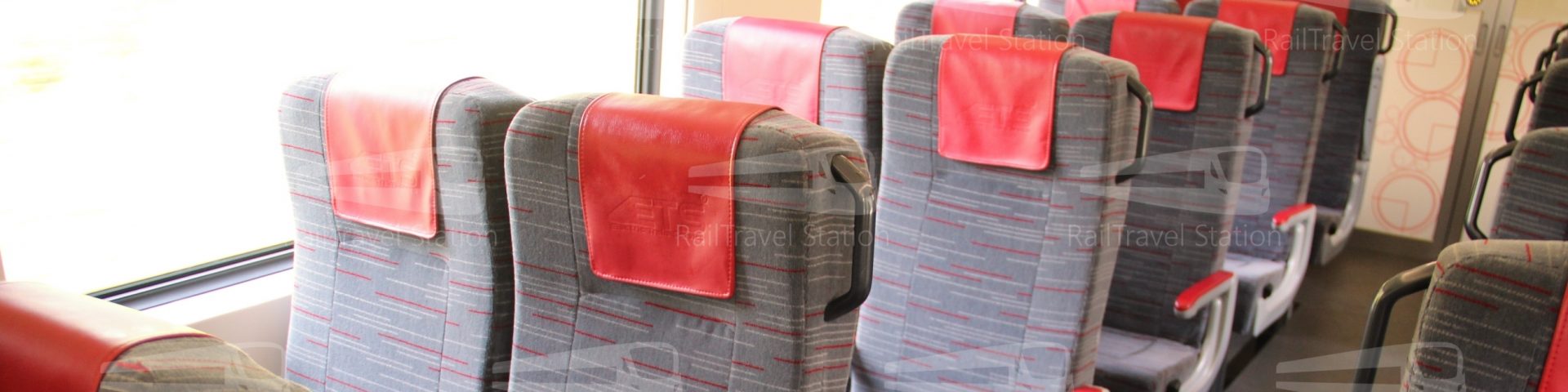
The interior of the regular Ekonomi PSO coaches. Being a subsidised train, the Lokal Merak only consists of Ekonomi PSO coaches seating 106 passengers each.

My Lokal Merak 429 departed from Merak Railway Station on time at 4.20pm.

The was very empty upon departure from Merak Railway Station, but I knew that it was going to get full along the way as the seat map on KAI Access was very full when I searched before departure.


Cleaners wearing KRL uniforms provide the on-board cleaning on the KAI Commuter-run Lokal Merah.

Crossing the railway crossing after Merak Railway Station.

Heading past local houses.


Heading along the sea out of Merak.

The bay of 2-abreast seats (D-E) on board the Ekonomi PSO coach, seating 4 passengers facing each other.

The bay of 3-abreast seats (A-B-C) on board the Ekonomi PSO coach, seating 6 passengers facing each other.

A side table and 2 2-pin power sockets are available by the window seats. Hooks are also available for light bags or for cable management, especially for the ABC side with 6 passengers sharing 2 power sockets.


Approaching the freight line from Cigading before entering Krenceng.


The junction from the freight line from Cigading at Krenceng.
Krenceng Railway Station

Making a brief stop at Krenceng Railway Station.

The train started to fill up at each station. Here’s the legroom on board the Ekonomi PSO coach. It’s not great, but remember fares are heavily subsidised for subsidised trains in Indonesia, at just Rp 3.000 for this 2-hour journey, with the trade-off of a high-density coach for passengers.
Cilegon Railway Station


Making a brief stop at Cilegon Railway Station.

More passengers boarded at Cilegon.

The rural scenery along the way.
Tonjong Baru Railway Station


Making a brief stop at Tonjong Baru Railway Station.


More local scenery along the way.
Karangantu Railway Station


Making a brief stop at Karangantu Railway Station where more passengers boarded.
Serang Railway Station

Crossing with an opposing Lokal Merak train at Serang Railway Station.


Making a brief stop at Serang Railway Station where a lot more passengers boarded, filling up the Lokal Merak.

Due to the position of the pedestrian crossing, my Lokal Merak stopped past the end of the platform.


My Lokal Merak 429 was now quite full.


Departing from Serang.
Walantaka Railway Station

Making a brief stop at Walantaka Railway Station.

The dark night skies combined with the purple tint on the windows made it difficult to take any more window photos from here on.
Jambu Baru Railway Station

Making a brief stop at Jambu Baru Railway Station.
Rangkasbitung Railway Station

My Lokal Merak 429 arrived at Rangkasbitung Railway Station on time at 6.18pm.


My connecting KAI Commuter Line Rangkasbitung KRL train was just across, but I couldn’t board it yet as I need to tap in to the KAI Commuter Line system to pay my fare correctly.

As the KRL train was blocking the thoroughfare when crossing the platforms, both sides of the doors are open for passengers to walk through.


Ironically crossing via my train connection to Jakarta to head out of Rangkasbitung Railway Station first before boarding this train properly.


Quickly heading out of Rangkasbitung Railway Station via the Lokal Merak exit.

My train connection is departing at 6.30pm, so I need to make this quick train transfer, or else the next train is in more than half an hour’s time due to the off-peak timetable heading in to Jakarta in the evening.


Heading out of Rangkasbitung Railway Station via the open gate for arriving Lokal Merak passengers.

The façade of Rangkasbitung Railway Station’s old building. Note that there is no entry for KRL (KAI Commuter Line Rangkasbitung) at the old station, and KAI Commuter Line Rangkasbitung passengers must use the new building west of the station.


Heading along the perimeter of Rangkasbitung Railway Station.


Heading to the new building of Rangkasbitung Railway Station where the KAI Commuter Line Rangkasbitung fare gates are.


Tapping into the KAI Commuter Line Rangkasbitung system with my JakLingko card.
Here, I continued my dash to the KRL train back at the platform in the hopes of catching it in good time, lest I end up waiting at Rangkasbitung for longer than I want to.
Conclusion
The Lokal Merak is an essential extension of the KAI Commuter Line Rangkasbitung to reach the end of the Merak Line for connection from the rest of Sumatra via the ferry from Bakauheni in Lampung. However, for foreigners actually wanting to travel from Sumatra to Java by train, this route may break the journey possibility if tickets are sold out, as Go Show tickets only open 3 hours before departure, but online KAI Access app tickets open 7 days before departure, for payment by local online modes of OVO and QRIS only.
While the move to a cashless society is commendable, it would be best if internationally-compatible modes of payments are used. If only OVO and QRIS is accepted for online tickets, and even passport numbers are not accepted (I had to key in additional 0s to fill up all 16 digits required), it seems that public local trains are reserved for local Indonesians only, since both passenger details and payment modes are catered to local systems only.
When there are no non-subsidised trains on this route, and if foreigners want to go by train from Merak without friends in Indonesia, only the Go Show option is available, which is risky for getting tickets. The only possible to get tickets in advance from Sumatra to Java is now probably only by bus on online travel agents.
One comment