

Nankai Limited Express Koya 1 from Osaka Namba to Gokurakubashi (for Koyasan Cable Car) Train Review
The Limited Express Koya is the most direct train to travel from Osaka to Koyasan, directly from the city centre and up the steep tracks to up to Koyasan (Gokurakubashi). To experience my last cold weather on this trip, and to maximise the use of my Nankai All Line 2 Day Pass, I headed up to Koyasan for a joyride with Limited Express Koya 1 from Osaka Namba to Gokurakubashi.

The Nankai All Line 2 Day Pass is a magnetic farecard, valid for 2 non-consecutive days, which was perfect for my itinerary to access the airport fro and to, and to go to Koyasan.
Osaka Namba Station


I first headed to the ticket reservations office at Nankai Osaka Namba Station to make my Limited Express ticket purchases for my entire day of Limited Express train rides. Do note that the Nankai All Line 2 Day Pass covers the basic fare only, and not reserved seat fees on Limited Express trains, which are paid for separately.

Next Limited Express train departures are displayed on a screen beside the ticket reservations counters.
During my trip, 2 pairs out of 4 Limited Express Koya trains were cancelled due to low demand thanks to the pandemic. The timetables have since been reinstated as it was before.

Payment is easy with my credit card. A seat reservation on Limited Express Koya from Namba, Shin-Imamiya, Tengachaya, or Sakaihigashi to Gokurakubashi costs 790 yen.
I also made my Nankai Rapi:t booking here to Kansai Airport, which was charged in a separate transaction.

Heading up to the platforms.

There is also a ticket reservations counter just before the platforms, but I figured that going downstairs to the office was less stressful since I was making 3 reservations in one go and I don’t want to hold back the crowds for immediate departures.

Heading through the ticket gates.

The departure board has Koya Line information on 1 side and Nankai Line information on the right, according to the track layout at Namba Station.

My Limited Express Koya 1 will be departing from Track 3.
The information screens at Namba Station also displays the Limited Express Koya 1 as bound for “Koyasan”.
While this is useful for those who know what’s going on already, I feel that this is quite misleading especially for first-timers and they get too comfortable when arriving at Gokurakubashi not knowing that a change of trains is required.
For the purpose of clarity, I will separate the 2 train journeys in 2 separate articles.

I arrived at Platform 3 in good time, just as the train before was departing.

The information screens rotate between Japanese, Chinese, Korean, and English.
Nankai Limited Express Koya 1

My Limited Express Koya 1 train arrived as the Limited Express Rinkan 4 from Hashimoto.

Passengers disembarked at the right side of the train, with the Spanish Solution in place.

The train was first cleaned up by the cleaners. A cleaning sign was put up at the doors to alert passengers from boarding the train.

Seats will also be rotated by the cleaners to face the direction of travel.

The front view of my Limited Express Koya 1.

The headboard of Limited Express Koya.


Limited Express Koya train information is also displayed on the side of the train cars.

The Limited Express Koya 1 was ready for boarding at 8.36am, 6 minutes before departure.

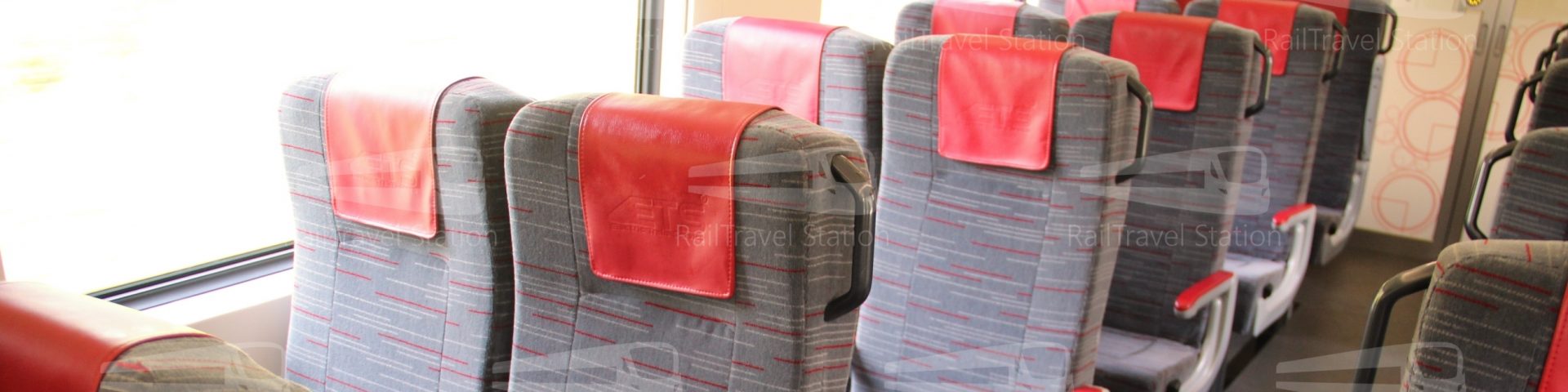
The interior of the Limited Express Koya Nankai Electric Railway 30000 series EMU.


Seats are in a 2+2 configuration throughout the train. All seats are reserved.


My window seat at 27.

The legroom on board the Limited Express Koya Nankai Electric Railway 30000 series EMU.

A tray table is available on the seat back in front.

My tickets for the Limited Express Koya 1 from Namba to Gokurakubashi. The Nankai All Line 2 Day Pass is for the travel fare, and the reserved seat ticket is for my seat on board Limited Express Koya 1. The Nankai All Line 2 Day Pass covers the travel fare for all Nankai Electric Railway lines, including the Koyasan Cable Car.

The front-most row will get a cab view of the train ride, however, legroom is slightly compromised due to the bulkhead of the cab.

An automatic door separates the seating area from the vestibules.

Time for a quick walkabout in the vestibules.


A western-style sitting toilet cubicle is available on board.


A standing urinal cubicle is also available on board.


A separate washing up area with a curtain is also available.


There are 2 drinks vending machines available on board, but they were both out of order.

My Limited Express Koya 1 was quite empty. Tourists haven’t fully returned during my trip.


My Limited Express Koya 1 departed from Namba Station on time at 8.42am.


Looking out to the front of the Limited Express Koya 1.

Passing by a Limited Express Rapi:t heading towards Namba.
Shin-Imamiya Station


Making a brief stop at Shin-Imamiya Station.
Shin-Imamiya Station is a major interchange, functioning as a south-cross station on the Osaka Loop Line between the Nankai Main Line and Nankai Koya Line, and JR West Osaka Loop Line, JR West Kansai Main Line (Yamatoji Line), Hankai Tramway Hankai Line, Osaka Metro Midosuji Line, and Osaka Metro Sakaisuji Line.
Tengachaya Station


Making a brief stop at Tengachaya Station.


Splitting off from the Nankai Main Line before Kishinosato-Tamade Station.

Passing through Kishinosato-Tamade Station (Koya Line).

Crossing over the Yamato River.
Sakaihigashi Station


Making a brief stop at Sakaihigashi Station.


The conductor came round after Sakaihigashi Station to check that everyone is in their assigned seats on her tablet.
Kongo Station


Making a brief stop at Kongo Station.
Kawachinagano Station


Making a brief stop at Kawachinagano Station.
Rinkanden-Entoshi Station


Making a brief stop at Rinkanden-Entoshi Station.

The journey gets a bit more scenic from Rinkanden-Entoshi, providing a preview of what’s to come.


Passing by Nankai Electric Railway Oharada Depot.


Approaching the JR Wakayama Line at Hashimoto.
Hashimoto Station


Making a brief stop at Hashimoto Station. Hashimoto Station is an interchange station for JR West Wakayama Line and Nankai Electric Railway Koya Line.


Nankai Electric Railway Koya Line trains in all bounds may depart from either Platform 4 or Platform 5, and are not fixed by direction. Check for train details before boarding.


Departing from Hashimoto Station.


The line becomes a single track from here on up till the end of the line at Gokurakubashi.


Crossing over the Kinokawa River.

Continuing the right turn to form a giant u-turn.

Looking back across at Hashimoto Station.
The train ride gets the most interesting here as the full power of the Nankai Electric Railway 30000 series EMU can be felt when ascending up Koyasan on the winding and steep track alignment.


Passing by some maintenance sidings at Kudoyama Station.


Passing through Kudoyama Station.


Rustic scenery along the way up Koyasan.


Heading through one of many tunnels.


Taking steep curves up Koyasan.


Crossing with a Local train.

Passing over a pedestrian level crossing.


Passing through Kii-Kamiya Station.


There are many tunnels leading up to Koyasan, with each of them numbered in ascending order.

Heading through the 23rd and final tunnel on approach to Gokurakubashi.


Passing by the level escape routes from Gokurakubashi Station leading to buffer stops.

Passing by Gokurakubashi or Gokuraku Bridge, the namesake of this terminal station.
Gokurakubashi Station

Arriving at Gokurakubashi Station with cleaners waiting to tidy up the train.

My Limited Express Koya 1 arrived at Gokurakubashi Station on time at 10.01am.

The station sign of Gokurakubashi Station.


Most if not everyone alighting at Gokurakubashi Station will be continuing on to Koyasan.


My Limited Express Koya at the buffer stop of Gokurakubashi Station.
Transfer to Koyasan Cable Car

The platform staff also makes announcements in Japanese for arriving passengers to transfer to the Koyasan Cable Car to continue on to Koyasan.


From here, I followed the crowd and signs to continue my journey to Koyasan with the Koyasan Cable Car. The transfer is within the paid area of Gokurakubashi Station.
Conclusion
While the Nankai Electric Railway 30000 series EMU may be made in 1983, it is still going strong today and does not look out of place as a 40-year-old train. The additional Limited Express reserved seat fee is worth it to pay to use the Limited Express Koya instead of a regular commuter train which would take longer and may be more crowded. The powerful motors of the 30000 series EMU can also be felt when ascending Koyasan, with all 4 cars having motors on board.
3 comments