
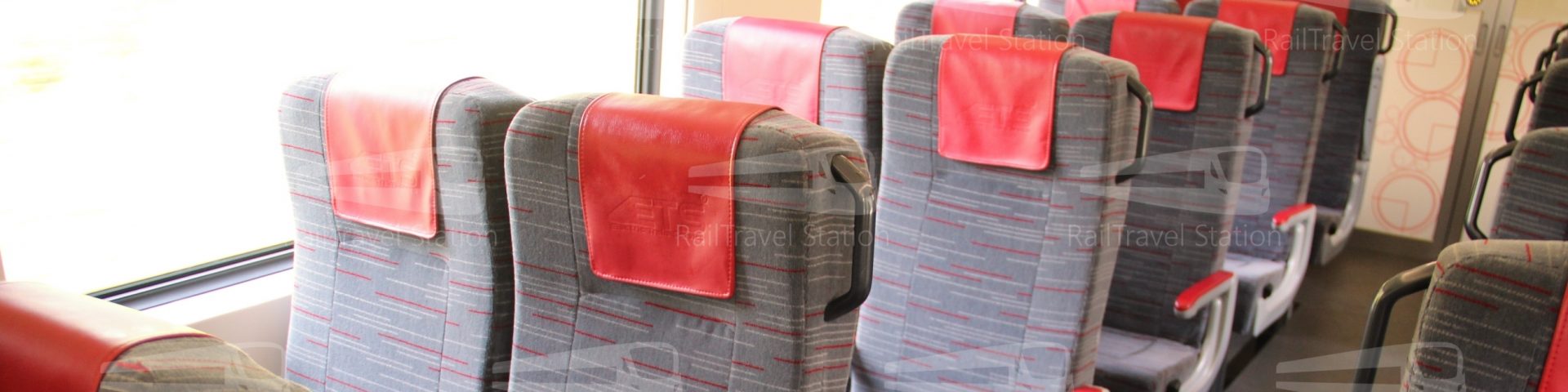

KA Pangrango 218C from Bogor to Sukabumi by Train in Economy Class (K3 2016 New Image with reclining seats)
KA Pangrango is a series of long-distance trains operating between Bogor and Sukabumi, extending south of the terminus of KAI Commuter Line Bogor at Bogor on the non-electrified line to Sukabumi. From 1 June 2022, the KA Pangrango was extended to Bogor Railway Station for easier passenger transfers between the KAI Commuter Line Bogor.
The Pangrango train is named after Mount Pangrango which the train skirts around on the eastern and southern sides of the dormant stratovolcano.
As KA Pangrango is not a subsidised train, I could make my booking easily online via credit card.
Bogor Railway Station


The current Bogor Railway Station is the second station building being built, with the first being opened in 1873 on the Nederlandsch-Indische Spoorweg Maatschappij (NISM) Buitenzorg Station. This current station was opened by Staatsspoorwegen (SS) for the Bogor–Bandung–Banjar–Kutoarjo–Yogyakarta railway line.

There is also a 3D train mural on a building adjacent to the station.

A spot is marked out on the ground for the photo angle.

Heading into Bogor Railway Station.


Station signs are sensitively placed on individual stands to not disrupt the façade of Bogor Railway Station.

The ticket hall of Bogor Railway Station.
Check-in

Heading to the check-in kiosks to get my boarding pass for my Pangrango 218C train.

My boarding pass for my Pangrango 218C train from Bogor to Sukabumi. Despite having registered my vaccination information on PeduliLindungi already, my vaccination status still remains as unvaccinated. I’m not sure if this problem is for all foreigners.
Ticket Checking

Heading to the platform at ticket checking.
My vaccination problem was easily solved by showing my vaccination certificate at ticket checking as my boarding pass was scanned by the staff.
Vaccination is no longer required to travel on KAI trains.

The first platform is still on the original low level, but is now not regularly served by passenger trains.

There is a Lapis Bogor Sangkuriang outlet here which seems to be popular with passengers.


Benches are provided for KA Pangrango passengers to wait on this first low platform.

The train dispatcher’s office is made up of a classic wood and glass panelling.


Toilets are available in a separate toilet building after the low platform.

Before the arrival of the incoming KA Pangrango, a sign was dragged out to face the crossing point of the tracks in the sheltered area pointing to Line 2.

The security personnel standby at the railway crossings for vehicles on the main road and passengers in the station to prepare for the arrival of the incoming Pangrango.

The KA Pangrango 215B departing from Bogor Paledang Railway Station across the road.

KA Pangrango 215B crossing over Jalan Kapten Muslihat into Bogor Railway Station.


KA Pangrango 215B arriving at Bogor Railway Station.

Economy Class coaches have been upgraded to use the Ekonomi New Image coaches launched in 2016.

Executive Class coaches are still using the older JS-950 type.

The railway crossing quickly reopens once the KA Pangrango 215B passed through.


The KA Pangrango 215B stopped quite far away, passed the middle point of the shelter, to facilitate passengers crossing over to the main station building behind the rake.

There is no segregation between Commuter Line and Pangrango passengers, but ticketing is separate anyway and dodging fares may be impossible anyway since all seats on Pangrango are assigned.
The security staff prepare to clear the crossing again for the locomotive to run around.


CC 206 13 45 running around at Bogor Railway Station.


I’m surprised that the locomotive went as far as Bogor Paledang Railway Station, instead of waiting just past the point on the road. This could be due to a block signalling system in place.


CC 206 13 45 returning to Bogor Railway Station.


CC 206 13 45 heading directly back to the rake of Pangrango.


Done with spotting the arrival of KA Pangrango 215B, I headed to standby to board my KA Pangrango 218C.

The Pangrango 218C now formed at Bogor Railway Station.

Boarding was not ready yet, with the crossing held back by a security staff.

The name plate of KA Pangrango on selected coaches.

The Executive Class JS-950 coach on KA Pangrango.

The Kereta Makan Pembangkit coach on KA Pangrango.

The Economy Class 2016 New Image coach on KA Pangrango.

There was a Commuter Line train ready for boarding on Platform 3, but this is accessed from the southern end of the platform for Commuter Line passengers.

Boarding commenced at 1.45pm – 35 minutes before scheduled departure.
K1 JS-950 Executive Class

The Pangrango still uses the older K1 JS-950 coaches for Executive Class seating.

The interior of the Pangrango K1 JS-950 Executive Class coach.

The seat upholstery however has changed to the 2019 version with a thicker seat padding, side headrests, and the new blue-beige covering. The seat frame remains as the original version, but that’s a smart reuse.
Kereta Makan Pembangkit (Restaurant & Power Car)

A Kereta Makan Pembangkit (KMP) (Restaurant & Power Car) is attached on the Pangrango, providing food and drinks service, and to provide hotel power to the train.

Bar seating facing out to the train windows away from the ordering counter is provided on board this KMP.

Food was already being prepared for sales at Bogor.


A mushola is also available on board the KMP for Muslim prayers.

Slippers are also provided for ablution.


The other half of the KMP contains the generator providing hotel power to the whole train. Surprisingly, it was not overly noisy and walking past the generator was not deafening.
K3 2016 New Image Economy Class

Most of the Pangrango train is made up of K3 2016 New Image Economy Class coaches, which were fully seated during the journey.


I was surprised and annoyed that seats on board this K3 2016 New Image Economy Class coach had been upgraded to recline, making it on par with Premium coaches but sold at Economy fares.
Personally, I see this as a downgrade as this means the person in front of me can recline into my legroom, which he did.

My booked seat at 4D.

The legroom on board the Ekonomi 2016 New Image coach with reclining Premium Class seats.

A side table and 2 2-pin power sockets are available by the window seat.

A cup holder is also provided on the seat back in front of airline-style seats.


Squatting and seating toilets are available on board the Ekonomi 2016 New Image coach.

The route map of the Pangrango train.

While containing Premium seats now, the coach side still advertises this coach as Ekonomi.


My Pangrango 218C departed from Bogor Railway Station on time at 2.20pm.


Crossing the pedestrian railway crossing inside Bogor Railway Station.


Crossing the main Jalan Kapten Muslihat road outside Bogor Railway Station.

The end of electrification is after the railway crossing on Jalan Kapten Muslihat.
Bogor Paledang Railway Station


Entering Bogor Paledang Railway Station.


I had thought that the extension to Bogor Railway Station would be more convenient and comfortable for passengers to board there, but there were still quite a number of passengers who preferred to board from Bogor Paledang Railway Station.

Departing from Bogor Paledang Railway Station.

Crossing the railway crossing on Jalan Kantor Baru.

The Bogor Paledang Railway Station area ends after the railway crossing.


Heading through Bogor on an elevated alignment, though not a viaduct.
Batutulis Railway Station


Making a brief stop at Batutulis Railway Station.

Departing from Batutulis Railway Station.


Continuing through South Bogor.
Ticket Checking

The conductor started his ticket checks on his phone. There is no need to produce tickets for ticket checking as reserved seats and passenger details are all displayed on the conductor’s phone.


It started raining heavily as the Pangrango headed out of the crowded areas.
Ciomas Railway Station

Making a brief stop at Ciomas Railway Station.
Maseng Railway Station


Making a brief stop at Maseng Railway Station.

I headed over to the KMP to get a meal shortly after departing from Maseng Railway Station.

Catering on board Pangrango had smaller meals and portions than longer distance trains, with price points lower too.

Orders can be placed from the counter.

I decided to sit at the KMP to have my meal since the view looks good out of the big windows.

A trolley was also prepared, but this only went to Executive Class coaches.

The rain had cleared up as I made my meal order.


The line curves around plantations and settlements on elevated terrains, offering a scenic view from the train.


Approaching Cigombong Railway Station.
Cigombong Railway Station


Making a brief stop at Cigombong Railway Station.

For this afternoon, I ordered a Bakso and Teh Botol.

The Bakso was an instant meal with water added upon order and microwaved.

Condiments are provided at the side.

The instant Bakso looks actually pretty presentable after I added the condiments in.
Cicurug Railway Station


Making a brief stop at Cicurug Railway Station.
Parungkuda Railway Station

Approaching Parungkuda Railway Station on a railway crossing.


Making a brief stop at Parungkuda Railway Station.


There are houses just opposite Parungkuda Railway Station on the loop line.

Crossing Cipamuruyan Bridge.
Cibadak Railway Station


Making a brief stop at Cibadak Railway Station.


The line gets a lot more scenic after Cibadak en route to Sukabumi.
Karangtengah Railway Station


Making a brief stop at Karangtengah Railway Station.


Heading along rice fields along the way.
Cisaat Railway Station


Making a brief stop at Cisaat Railway Station.


Heading along the final stretch to Sukabumi Railway Station.
Sukabumi Railway Station

Entering Sukabumi Railway Station.


Spare coaches and a locomotive was stabled on a loop line in Sukabumi Railway Station.
My Pangrango 218C train arrived at Sukabumi Railway Station at 4.31pm – 1 minute delayed.


Alighting from the Pangrango with steps provided on the low platform.

A platform on the tracks is available in the middle of the station for passengers to cross the inside line into the station building.

The station sign of Sukabumi Railway Station.

The Pangrango 218C was longer than the platforms of Sukabumi Railway Station, and I was unable to get a front train shot here.

Heading back to the main station building.

The crowd had cleared from the platform by now, allowing for an easier walk to the exit.

Crossing the inner track to the main station building.


Heading out of Sukabumi Railway Station.

It started to rain again just in time for the Pangrango 218C arrival, causing some passengers to be stranded in the station.


I braved the initial drizzle to get a picture of the façade of Sukabumi Railway Station, since I had limited time in Sukabumi before my return trip.
Conclusion
The Pangrango offers an important extension of the KAI Commuter Line Bogor for onward travel from Bogor to Sukabumi. This was the original railway which connected Jakarta to the rest of Java in 1881, but is now just a local rural line with trains using the much faster and direct route via Cikampek and Purwakarta.
Connection onwards to Cianjur and Cipatat by the onwards KA Siliwangi is a hassle for foreign tourists as it is a subsidised local train and only bookings on the KAI Access app is possible from 7 days to 2 hours before departure with payment only by OVO or QRIS digital payment service which only locals with a local phone number can register for.
Even if foreigners get a local phone number, a local Indonesian SIM card cannot be used on a foreign phone unless the phone IMEI has been registered with the Directorate General of Customs and Excise.
For now, my joyride truncates here with the KA Pangrango non-subsidised train, and I will be returning back to Bogor with the same rake on Pangrango 217B.
One comment