

Preserved KTM 22 Class Locomotive and AEC Coaches at Pekan Kafe Belibis (Sultan Abu Bakar Museum)
Nestled in the royal town of Pekan, Pahang, the Sultan Abu Bakar Museum is a treasure trove of history and culture. Yet, just beside this stately museum, another piece of Malaysia’s railway heritage quietly draws visitors: a preserved KTM 22 Class locomotive and 3 AEC coaches, now repurposed as Kafe Belibis—a café where history meets hospitality.
Kafe Belibis is more than just a café—it’s an immersive experience. Housed in former KTM Intercity AEC coaches, the venue lets guests dine inside the very coaches that once traversed the Malaysian countryside. The interiors have been thoughtfully lightly renovated: original train seats remain though in a different layout, preserving the authentic railway ambiance, while new wooden tables and air-conditioning ensure comfort for café diners.
While the setting is undeniably unique, Kafe Belibis also delights with its menu. Guests can enjoy a blend of local and Western dishes, from traditional Laksa Pahang and puding raja to spaghetti and chicken chop. The food isn’t that fantastic, but dining inside the old coaches is the main highlight.
KTM 22 Class Locomotive 22135 Geliga
The KTM 22 Class locomotives were once the backbone of Keretapi Tanah Melayu’s (KTM) mainline diesel fleet. Designed by English Electric-AEI Traction and constructed by Metro-Cammell, these dual-cab, full-width body locomotives were robust, versatile, and powered by a 1,760 bhp V-8 engine. Their engineering allowed them to serve Malaysia’s railways faithfully for decades, with a distinctive truss structure and bolsterless bogies ensuring both strength and stability.

22 Class Locomotive 22135 Geliga

The cab of 22 Class Locomotive 22135 Geliga.

The cab of 22 Class Locomotive 22135 Geliga.

The engine of 22 Class Locomotive 22135 Geliga.

The vent of 22 Class Locomotive 22135 Geliga has been replaced with glass for a clearer view of the engine.
KTM Air-conditioned Economy Class (AEC) & ASC (Hartasuma)
The KTM Air-conditioned Economy Class (AEC) passenger coach used by KTM Intercity were designed to offer basic, affordable seating for long-distance travel, making them a popular choice among budget-conscious travellers such as students. The AEC coaches featured simpler, higher-density seating with 74 seats compared to higher-class coaches like the Air-conditioned Second Class (ASC)‘s then 52 seats, but their lower fares made them accessible to a wider segment of the population.
Many AEC coaches were refurbished into ASC (Hartasuma) Air-conditioned Second Class coaches by removing a few rows of seats, changing the seat cover, and rotating them to face outwards from the middle rather than inwards towards the middle table. The ASC (Hartasuma) coaches provided a bit more legroom with 15 rows of seats from the former 19, but otherwise much of the fixtures remain the same as the AEC coaches including the sliding glass door and pull-down blinds.
ASC 2215 (Kafe Gerabak Kopi)
Kafe Gerabak Kopi is a distinctive café located inside the former ASC 2215. This charming spot offers visitors the chance to enjoy coffee and light bites within the nostalgic ambiance of an actual train coach, making it a must-visit for both locals and tourists seeking something out of the ordinary. Kafe Gerabak Kopi offers a variety of coffee drinks, such as lattes, cappuccinos, and creative options like strawberry matcha. The menu also features a tempting selection of cakes and pastries, including blueberry cheese tarts, Portuguese egg tarts, and burnt cheesecake.
Exterior


Interior
The original seats in ASC 2215 have been fully removed, with a new longitudinal seating padded bench on 1 side to fit moveable tables and stools for café seating.


The northern end of ASC 2215 closest to 22135 Geliga is now an operational café area with a small kitchen and sales counter.


ASC 2210 (Kafe Belibis)
Kafe Belibis is a unique café offering diners the rare experience of enjoying their meals inside authentic former KTM railway carriages. Unlike Kafe Gerabak Kopi, the interior of ASC 2210 and ASC 2213 retains much of its former life on the rails with just light refurbishment for café seating. Kafe Belibis is “parked” under a new platform for a pseudo-station experience.


Kafe Belibis is open Tuesdays to Sundays, from 8am to 6:30pm. It is closed on Mondays.

Seats have been removed from one side of the coach, with seats rotated on the other side to form a table of 4 for café dining.


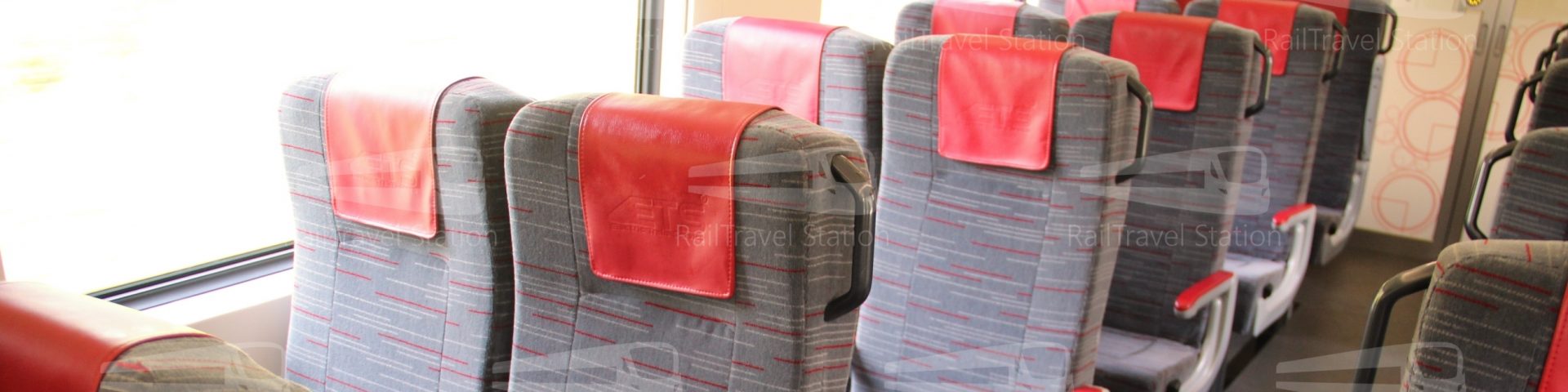
The original AEC/ASC (Hartasuma) seats now have a new grey cover. All other seat fixtures remain the same, and the seats can still be reclined. A new wooden table is placed between each row of facing seats for a more comfortable dining-in experience.


Additional seats and baby chairs are also provided on the other side with seats removed, for a more flexible seating arrangement inside the café.

ASC 2213 (Kafe Belibis)
The simple acrylic piece of “ASC” is a throwback to when AEC coaches were used as ASCs, with the original AEC number for all internal paperwork and the simple “ASC” acrylic piece to tell passengers that it is a second class coach (even though it almost isn’t). The handwritten 2213 is the new ASC number after it was renumbered from the original AEC number.

Seats have been removed from one side of the coach, with seats rotated on the other side to form a table of 4 for café dining.

The original AEC/ASC (Hartasuma) seats now have a new grey cover. All other seat fixtures remain the same, and the seats can still be reclined. A new wooden table is placed between each row of facing seats for a more comfortable dining-in experience.

Seat numbers have been reproduced, which are manually typed as seen in this “AISEL” error.
